
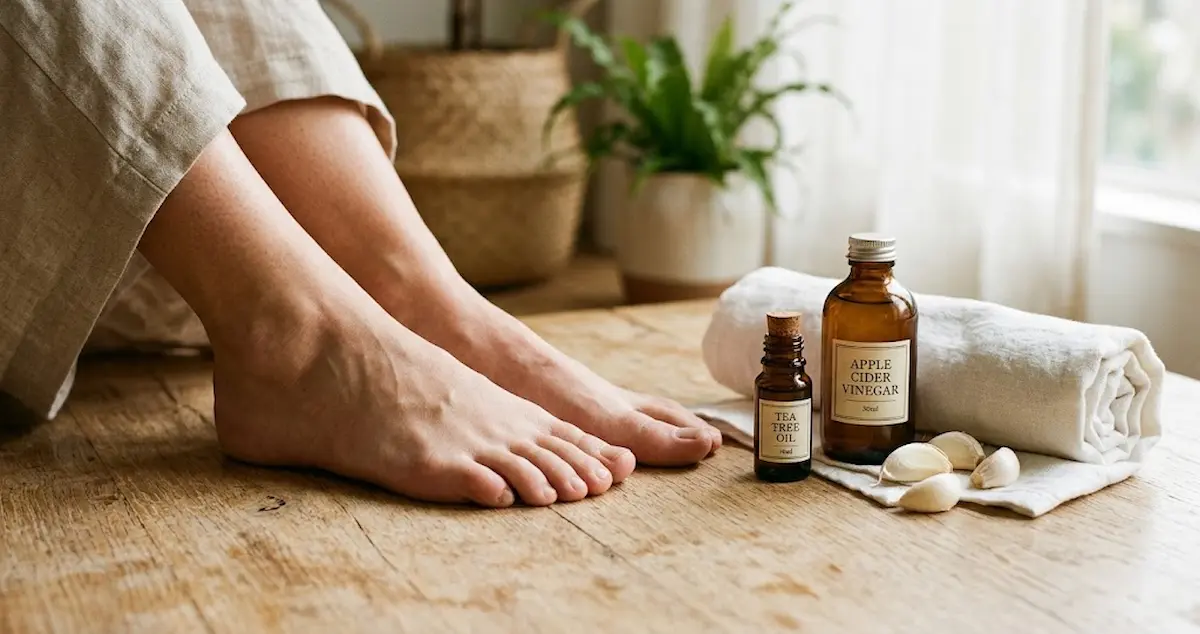
10 Toenail Fungus Home Remedies (Backed by Evidence)
If you’ve noticed a toenail turning yellow, thick, or brittle, you’ve probably already searched for a toenail fungus home remedy before considering anything stronger. The good news: several natural approaches have real evidence behind them for mild to moderate cases, even if they work slowly and require consistency. The important caveat: home remedies manage the surface of the problem better than they eliminate an established infection, so knowing what to expect matters as much as knowing what to try.
Disclosure: This post contains affiliate links. If you purchase through one of these links, we may earn a small commission at no extra cost to you. We only recommend products we believe may genuinely help our readers.
What Causes Toenail Fungus?
Toenail fungus (onychomycosis) is typically caused by dermatophytes, the same fungi behind athlete’s foot, though yeasts and molds can also be responsible. These organisms thrive in warm, damp environments — inside sweaty shoes, at pool decks, in locker rooms — and enter through tiny cracks in the nail or surrounding skin, according to the Mayo Clinic. Once established, the fungus lives underneath the nail plate, which is exactly why topical treatment of any kind, natural or over-the-counter, can take months to show results.
Risk factors include older age, poor circulation, excessive sweating, a prior nail injury, walking barefoot in public wet areas, and having athlete’s foot that spreads to the nail. Understanding this helps set realistic expectations: a home remedy for toenail fungus works by creating a hostile environment for the fungus and supporting healthy nail growth, not by “killing” the infection overnight.
10 Toenail Fungus Home Remedies to Try
These are the most commonly recommended toenail fungus home remedy options, ordered roughly by how much consumer and preliminary research interest each one has received. Consistency matters more than any single ingredient — most people apply their chosen remedy daily for several months.
1. Tea Tree Oil
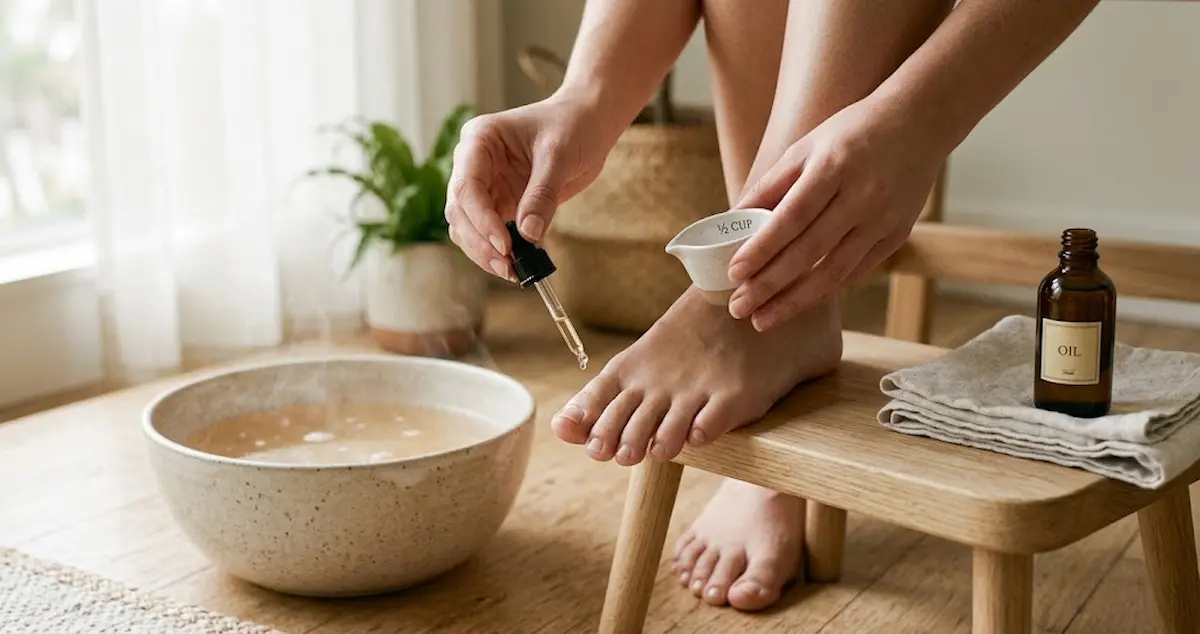
Tea tree oil has natural antifungal and antiseptic properties and is one of the most studied essential oils for nail and skin fungus. Apply a few drops directly to the clean, dry nail twice a day with a cotton swab. Always dilute it with a carrier oil like coconut or jojoba oil if you have sensitive skin, since undiluted tea tree oil can cause irritation.
2. Apple Cider Vinegar Soaks
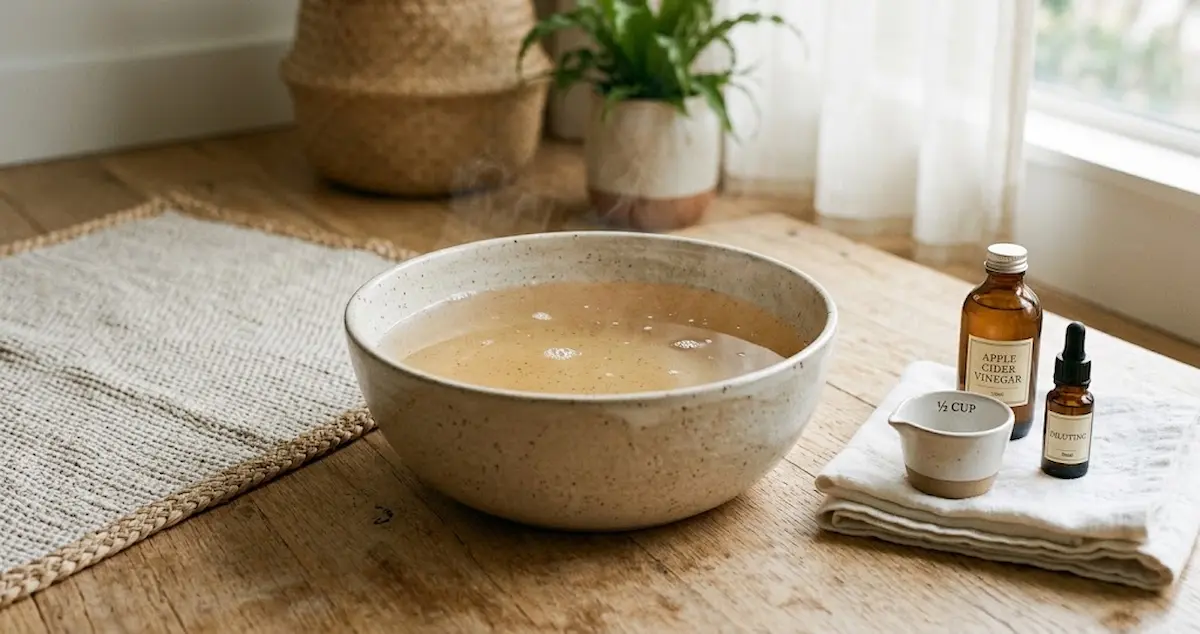
Apple cider vinegar creates an acidic environment that’s less hospitable to fungal growth. Mix equal parts vinegar and warm water in a basin and soak the affected foot for 15–20 minutes daily, then dry thoroughly. Some people alternate this with a baking soda soak to help balance skin pH.
3. Garlic
Garlic contains allicin, a compound with documented antifungal activity in lab studies. Crush a fresh clove and mix it with olive oil, then apply the paste to the nail and cover with a bandage for 30 minutes before rinsing. It has a strong smell, so evening application tends to work best.
4. Baking Soda
Baking soda helps absorb moisture and creates an alkaline environment that discourages fungal growth. Sprinkle it directly into socks and shoes, or make a paste with a little water and apply it to the nail for a few minutes before rinsing and drying completely.
5. Vicks VapoRub
An often-cited small study found that a majority of participants who applied Vicks VapoRub daily saw some improvement in their nails over several months. Its camphor, eucalyptus oil, and menthol content are thought to have mild antifungal effects. Apply a small amount to the nail once a day.
6. Oregano Oil
Oregano oil contains thymol and carvacrol, compounds studied for antifungal activity. Dilute it with a carrier oil before applying to the nail, since it’s a strong oil that can irritate skin at full strength.
7. Hydrogen Peroxide
A diluted hydrogen peroxide solution (equal parts peroxide and water) can be dabbed onto the nail or used as a brief soak. It helps lighten fungal discoloration and has mild antimicrobial properties, though it shouldn’t be used on broken skin.
8. Listerine Soaks
Original amber Listerine contains menthol, thymol, and eucalyptol — the same antifungal-adjacent compounds found in some essential oils. Soak the affected foot in undiluted Listerine for 20–30 minutes daily.
9. Coconut Oil
Coconut oil’s medium-chain fatty acids, particularly caprylic and lauric acid, have shown antifungal activity against several Candida species in lab research. Massage a small amount into the nail and surrounding skin daily; it also helps prevent the dryness and cracking that can let fungus back in.
10. Proper Foot Hygiene and Daily Care
No topical remedy works well in a damp, dark shoe. Keep nails trimmed straight across and short, change socks daily (moisture-wicking materials help), rotate shoes so they fully dry between wears, disinfect nail clippers after each use, and avoid walking barefoot in communal showers or pool areas. This daily routine is what actually determines whether any toenail fungus home remedy above gets a fair chance to work.
Tried Home Remedies With Limited Results?
Read Our Full KeraFirm Pro ReviewWhen Home Remedies Aren’t Enough
A toenail fungus home remedy tends to work best on mild, early-stage discoloration — not on nails that are already thick, crumbling, or lifting from the nail bed. If you’ve been consistent with a natural approach for 8–12 weeks without any visible change, or the infection is spreading to other nails, it may be time to look at a dedicated nail support formula or talk to a podiatrist about prescription options. Many readers in this situation use a natural remedy alongside a targeted supplement to support healthy nail growth from the inside while the topical routine works on the surface.
FAQ: Toenail Fungus Home Remedy
What is the fastest home remedy for toenail fungus?
No home remedy works overnight, but tea tree oil and apple cider vinegar soaks tend to show the earliest visible changes, sometimes within a few weeks, when applied consistently twice a day. Full nail regrowth still takes several months regardless of the remedy used.
Does apple cider vinegar really work on toenail fungus?
Apple cider vinegar’s acidity can help create an environment that’s less friendly to fungal growth, and many people report improvement in mild cases. It works better as a supportive daily soak alongside good foot hygiene than as a standalone cure for an established infection.
How long do home remedies take to work on toenail fungus?
Because toenails grow slowly, most home remedies need 3 to 6 months of daily use before you see a fungus-free nail grow in completely. Consistency matters more than which specific remedy you choose.
Can tea tree oil get rid of toenail fungus completely?
Tea tree oil may help manage mild surface discoloration and has antifungal properties, but it doesn’t reliably penetrate deep enough to clear a well-established infection on its own. It’s best used as part of a broader routine rather than a complete solution.
When should I see a doctor instead of using home remedies?
See a podiatrist or doctor if the nail is very thick, painful, spreading to other nails, or if you have diabetes or poor circulation, since fungal infections can become harder to manage in those cases. A professional can also confirm it’s fungus and not another nail condition.
These statements have not been evaluated by the Food and Drug Administration. This product is not intended to diagnose, treat, cure, or prevent any disease. This article is for informational purposes only and is not a substitute for professional medical advice.